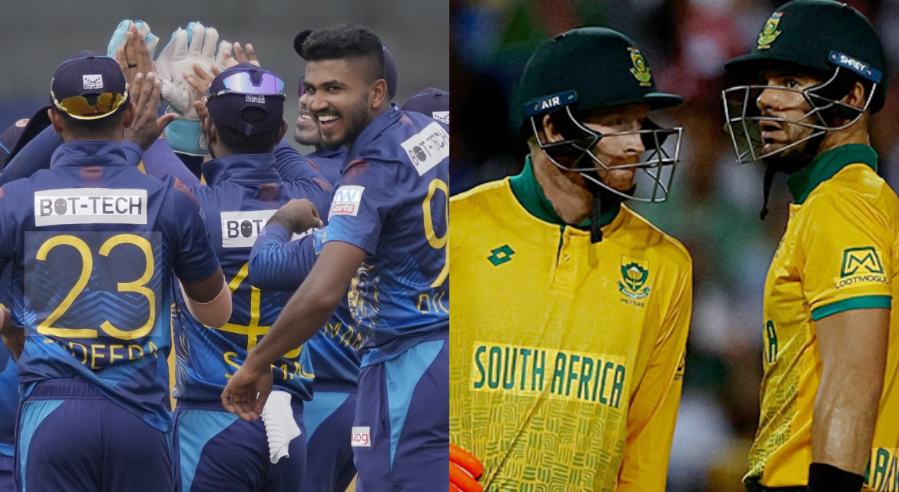
The cricket rivalry between these two sides has grown steadily over decades, shaped by contrasting playing styles, shifting momentum, and unforgettable performances. From early encounters dominated by fast bowling and tactical discipline to modern high scoring battles driven by aggressive batting, every phase has added a new layer to the story. Matches between them have often reflected changing eras of international cricket, where conditions, strategy, and individual brilliance played major roles. Fans have witnessed intense pressure moments, dramatic collapses, and game changing partnerships that defined entire series. This long standing contest continues to be a showcase of skill, resilience, and evolving cricketing philosophy on the global stage.
Latest Matches
Date
Format
Venue
Winner
Margin
Batting First
Bowling First
Dec 5-9 2024
Test
Gqeberha
South Africa
109 runs
South Africa
Sri Lanka
Nov 27-Dec 1 2024
Test
Durban
South Africa
233 runs
South Africa
Sri Lanka
Jun 3 2024
T20I
New York
South Africa
6 wickets
Sri Lanka
South Africa
Oct 7 2023
ODI
Delhi
South Africa
102 runs
South Africa
Sri Lanka
Sep 14 2021
ODI
Colombo
Sri Lanka
78 runs
Sri Lanka
South Africa
Sep 12 2021
T20I
Colombo
South Africa
10 wickets
Sri Lanka
South Africa
Team Statistics Summary
Team
Format
Matches
Won
Lost
Tied
No Result
South Africa
Test
33
18
9
0
6
Sri Lanka
Test
33
9
18
0
6
South Africa
ODI
81
46
33
1
1
Sri Lanka
ODI
81
33
46
1
1
South Africa
T20I
18
13
5
0
0
Sri Lanka
T20I
18
5
13
0
0
Individual Batting Records
Player
Team
Matches
Innings
Runs
Highest Score
Average
Kumar Sangakkara
Sri Lanka
44
48
1857
138
41.26
Mahela Jayawardene
Sri Lanka
49
53
1722
126
35.14
Jacques Kallis
South Africa
37
39
1641
150
46.88
Hashim Amla
South Africa
31
34
1449
139
45.28
Marvan Atapattu
Sri Lanka
35
39
1364
120
36.86
AB de Villiers
South Africa
32
30
1271
121
47.07
Individual Bowling Records
Player
Team
Matches
Innings
Wickets
Best Bowling
Economy
Muttiah Muralitharan
Sri Lanka
41
43
98
6/39
3.51
Shaun Pollock
South Africa
46
46
67
5/20
3.65
Lasith Malinga
Sri Lanka
33
31
48
5/34
5.12
Kagiso Rabada
South Africa
18
24
47
6/50
4.21
Dale Steyn
South Africa
21
24
43
5/50
3.98
Chaminda Vaas
Sri Lanka
36
36
41
4/33
4.18
Early Encounters Between Two Emerging Cricket Forces
The first meetings between these two sides came at a time when international cricket was undergoing major transitions. One team was rebuilding its global presence after reentry into world cricket, while the other was establishing itself as a fearless Asian competitor. These early matches were marked by contrasting styles. One side relied heavily on pace, bounce, and disciplined field setups, while the other leaned on spin variations and creative batting in home conditions. The contests were often one-sided initially, but they slowly built respect between the teams. Players were still adjusting to unfamiliar conditions, and that made every match unpredictable. Young talents from both sides used these games to announce themselves on the world stage. Even when results were clear, the fight within overs often told a different story. These encounters laid the foundation of a rivalry that would later grow into one of the most tactically rich contests in international cricket.
Match Year
Venue
Winner
Key Performer
Highlight
1993
Cape Town
South Africa
Allan Donald
Pace domination
1993
Colombo
South Africa
Jonty Rhodes
Fielding impact
1998
Johannesburg
South Africa
Gary Kirsten
Opening stability
1998
Colombo
Sri Lanka
Aravinda de Silva
Home advantage spin
2000
Durban
South Africa
Shaun Pollock
All round control
First ODI Clashes and Competitive Foundation
As ODI cricket became more structured and strategic, the encounters between these two sides started showing more balance. Early one-day matches were not just about skill but also about adapting quickly to changing conditions. South Africa often entered with strong fast bowling combinations, aiming to dominate the powerplay overs. Meanwhile, Sri Lanka focused on building partnerships and accelerating in the middle overs. These matches revealed the importance of game awareness rather than raw talent alone. The pressure of chasing totals or defending under lights added another layer of complexity. Fielding standards from South Africa often gave them an early edge, while Sri Lanka’s improvisation with bat and ball made them dangerous in subcontinent conditions. Several matches went down to the final overs, creating early excitement for fans and setting up a long-standing competitive balance between the two teams in ODI cricket.
Match Year
Venue
Winner
Key Performer
Highlight
1993
Paarl
South Africa
Hansie Cronje
Chase control
1993
Colombo
South Africa
Sanath Jayasuriya
Early aggression
1997
Durban
Sri Lanka
Arjuna Ranatunga
Captaincy impact
1997
Colombo
Sri Lanka
Muttiah Muralitharan
Spin breakthrough
1999
Port Elizabeth
South Africa
Lance Klusener
Finishing power
Rise of Pace Versus Spin Tactical Battle
One of the defining features of this rivalry became the constant clash between fast bowling strength and spin mastery. South Africa’s attack often relied on steep bounce, heavy seam movement, and relentless accuracy. On the other side, Sri Lanka developed a spin-heavy strategy designed to exploit slow pitches and pressure middle-order batting. This created a fascinating tactical duel every time the teams met. Batters were forced to adjust their techniques depending on the venue, making consistency a major challenge. In South African conditions, the ball moved quickly, testing footwork and reaction time. In Sri Lankan conditions, patience and rotation of strike became crucial. Coaches from both sides began planning long-term strategies rather than focusing on individual matches. This phase elevated the rivalry from simple competition to a chess-like battle of cricketing intelligence.
Match Year
Venue
Winner
Key Performer
Highlight
2001
Durban
South Africa
Shaun Pollock
Seam movement
2002
Colombo
Sri Lanka
Muralitharan
Spin dominance
2004
Johannesburg
South Africa
Dale Steyn
Raw pace
2006
Colombo
Sri Lanka
Lasith Malinga
Death bowling
2007
Cape Town
South Africa
Jacques Kallis
All round balance
Early Series Breakdown and Momentum Shifts
As bilateral series became more frequent, patterns of dominance began to shift depending on conditions. South Africa often controlled home series with disciplined bowling and sharp fielding. Sri Lanka, however, made strong comebacks at home by exploiting spin-friendly pitches and crowd support. Momentum swings became a common feature of these series, with one team dominating early matches while the other responded strongly later. Individual brilliance often decided outcomes rather than team consistency. Batting collapses under pressure were also a recurring theme, especially when chasing challenging totals. These early series showed that neither team could dominate consistently across all conditions. Instead, adaptability became the key factor separating winners from losers. Fans started recognizing this rivalry as one where no match could be taken lightly, regardless of past results.
Match Year
Venue
Winner
Key Performer
Highlight
2000
Durban
South Africa
Shaun Pollock
Bowling control
2001
Colombo
Sri Lanka
Marvan Atapattu
Batting anchor
2003
Johannesburg
South Africa
Herschelle Gibbs
Power hitting
2004
Colombo
Sri Lanka
Kumar Sangakkara
Middle order strength
2006
Centurion
South Africa
AB de Villiers
Emerging talent
World Cup Encounters That Changed Momentum
ICC tournaments added a completely new level of pressure to this rivalry. World Cup matches between these two sides were not just about skill but also mental strength. Every mistake carried greater consequences, and every performance was magnified. South Africa entered many of these matches with high expectations but often faced unexpected challenges from Sri Lanka’s tactical discipline. Sri Lanka, on the other hand, used these opportunities to create historic upsets and strengthen their reputation in global tournaments. Fielding brilliance, smart bowling changes, and calculated batting approaches defined these clashes. Fans from both sides treated these matches as high-stakes battles, where momentum could shift within a single over. These encounters significantly influenced how both teams approached knockout pressure in later tournaments.
Match Year
Venue
Winner
Key Performer
Highlight
1996
Rawalpindi
Sri Lanka
Aravinda de Silva
Match winning innings
1999
Cardiff
South Africa
Lance Klusener
Late surge
2003
Cape Town
Sri Lanka
Chaminda Vaas
Early wickets
2007
Sydney
South Africa
Graeme Smith
Captain’s knock
2011
Colombo
Sri Lanka
Lasith Malinga
Death over spell
Legendary Player Rivalries That Defined the Era
As the rivalry matured, individual battles began shaping outcomes. One of the most fascinating contests was between elite batting and world class spin. Players like Jacques Kallis brought stability and classical technique, while Muttiah Muralitharan challenged every defensive method with his spin variations. These duels were not just about runs or wickets but about psychological pressure. Each delivery carried tactical intent, and each over felt like a mini battle within the match. Batters had to constantly adjust footwork and shot selection, while bowlers focused on breaking rhythm. These encounters often decided the direction of entire matches. The presence of such high-quality players elevated the rivalry into one of the most respected contests in international cricket.
Match Year
Venue
Winner
Key Performer
Highlight
2002
Durban
South Africa
Jacques Kallis
Stability innings
2003
Colombo
Sri Lanka
Muralitharan
Spin control
2005
Johannesburg
South Africa
Kallis
Match saving knock
2006
Colombo
Sri Lanka
Muralitharan
Wicket haul
2007
Cape Town
South Africa
Kallis
All round impact
Conclusion
Over the years, this rivalry has developed into a balanced and competitive cricketing relationship where no team can claim permanent dominance. Each encounter brings a new challenge shaped by conditions, form, and tactical decisions. Both sides have produced match winners, record breaking performances, and unforgettable finishes that have kept fans engaged worldwide. The evolution from early one sided games to modern evenly matched contests highlights how far both teams have come. Today, this rivalry stands as a respected chapter in international cricket, representing growth, adaptability, and the enduring spirit of competition at the highest level.