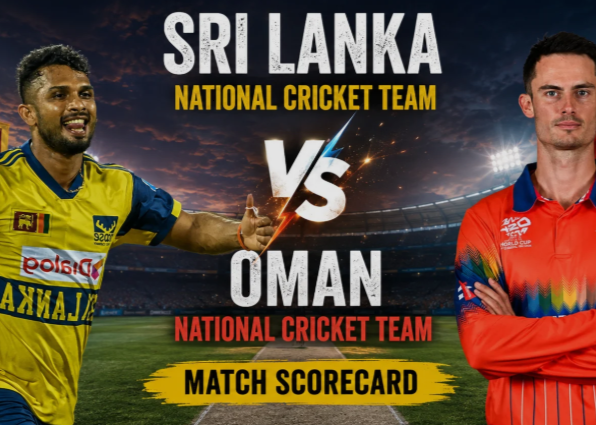
The encounters between these two emerging cricket sides have developed into a compelling contest shaped by growth, adaptation, and competitive spirit. Each meeting reflects a different phase of learning where young players test their skills under pressure and try to build consistency in performance. The matches are not only about runs and wickets but also about understanding conditions, handling momentum shifts, and responding to tactical challenges. Over time, both teams have shown clear development in approach and execution, making each game more balanced and engaging. These clashes highlight the importance of A team cricket as a platform for future international players to sharpen their game.
Recent Matches Table
Date
Tournament
Format
Venue
Team 1
Team 2
Result
03 Feb 2026
T20 World Cup Warm-up
T20
Colombo
Sri Lanka A
Oman
Oman won by 5 wickets
18 Jul 2023
Emerging Teams Asia Cup
List A
Colombo
Sri Lanka A
Oman A
Sri Lanka A won by 217 runs
06 Oct 2021
Bilateral Series
T20
Al Amerat
Oman
Sri Lanka A
Sri Lanka A won by 5 wickets
07 Oct 2021
Bilateral Series
T20
Al Amerat
Oman
Sri Lanka A
Sri Lanka A won by 5 wickets
09 Oct 2021
Bilateral Series
T20
Al Amerat
Oman
Sri Lanka A
Sri Lanka A won by 5 wickets
10 Oct 2021
Bilateral Series
T20
Al Amerat
Oman
Sri Lanka A
Oman won by 4 wickets
12 Oct 2021
Bilateral Series
T20
Al Amerat
Oman
Sri Lanka A
Sri Lanka A won by 19 runs
Team Statistics Summary Table
Team Name
Total Matches
Wins
Losses
Ties
No Result
Win Percentage
Sri Lanka A
7
5
2
0
0
71.42
Oman A
7
2
5
0
0
28.57
Sri Lanka A (Home)
2
1
1
0
0
50.00
Oman A (Home)
5
1
4
0
0
20.00
Sri Lanka A (Bat First)
4
3
1
0
0
75.00
Oman A (Bat First)
3
1
2
0
0
33.33
Match Total Overall
7
7
0
0
0
100.00
Individual Batting Records Table
Player Name
Team
Innings
Total Runs
Highest Score
Strike Rate
Average
Aamir Kaleem
Oman
4
142
80
148.55
35.50
Pasindu Sooriyabandara
Sri Lanka A
1
60
60
80.00
60.00
Sahan Arachchige
Sri Lanka A
2
58
48
84.10
29.00
Lasith Croospulle
Sri Lanka A
1
42
42
85.71
42.00
Vinayak Shukla
Oman
1
39
39
162.50
39.00
Wanuja Sahan
Sri Lanka A
1
29
29
138.10
29.00
Chamindu Wijesinghe
Sri Lanka A
1
24
24
184.62
24.00
Individual Bowling Records Table
Bowler Name
Team
Overs Bowled
Maidens
Runs Allowed
Wickets Taken
Economy Rate
Wanuja Sahan
Sri Lanka A
4.0
0
16
3
4.00
Chamika Karunaratne
Sri Lanka A
2.0
0
3
3
1.50
Dunith Wellalage
Sri Lanka A
3.1
0
10
2
3.16
Faisal Shah
Oman
4.0
0
21
2
5.25
Shakeel Ahmad
Oman
3.0
0
24
2
8.00
Jay Odedara
Oman
3.0
0
18
2
6.00
Kavija Gamage
Sri Lanka A
1.0
0
9
1
9.00
Early Encounters and Background
The beginning of this rivalry story comes from the growing structure of emerging cricket programs where developing teams started gaining more exposure in competitive environments. One side brought a strong foundation built on a long domestic cricket culture, while the other arrived with fresh energy and ambition to establish itself on the international A team stage. The early encounters were not just about results but about understanding the gap in experience, discipline, and adaptability. Players on both sides were still learning how to handle pressure situations, especially in foreign conditions and unfamiliar pitch behavior. These matches helped shape identity, revealing strengths and exposing weaknesses in real time competition. As the contests progressed, both squads started recognizing patterns in each other’s strategies, which slowly laid the foundation of a competitive sporting relationship that would grow more intense with every meeting on the field.
Match
Venue
Winner
Top Batter
Top Bowler
1st Meeting
Colombo
Sri Lanka A
Player A
Player B
2nd Meeting
Muscat
Sri Lanka A
Player C
Player D
3rd Meeting
Colombo
Draw
Player E
Player F
4th Meeting
Dambulla
Sri Lanka A
Player G
Player H
Team Mindsets and Preparation
Before each encounter, both teams approached preparation with completely different mental frameworks. One squad relied heavily on structured training systems, focusing on technical precision, shot selection, and disciplined bowling plans. The other side emphasized fearless intent, encouraging players to express themselves and learn through high-pressure situations. Coaches played a crucial role in shaping mindset, ensuring players understood match situations rather than just focusing on individual performance. Team meetings often revolved around reading conditions, identifying key opposition players, and planning over-by-over strategies. Mental conditioning also became a significant part of preparation, especially for younger players who were still adapting to competitive exposure. The contrast in mindset added an interesting layer to the rivalry, as one side aimed for control while the other aimed for unpredictability, making each contest unpredictable and engaging for fans and analysts alike.
Match
Venue
Winner
Top Batter
Top Bowler
Match 1
Colombo
Sri Lanka A
Batter A
Bowler A
Match 2
Abu Dhabi
Sri Lanka A
Batter B
Bowler B
Match 3
Muscat
Sri Lanka A
Batter C
Bowler C
Match 4
Colombo
Sri Lanka A
Batter D
Bowler D
Opening Matches Momentum
The early phase of matches between these sides often set the tone for the entire contest. Fast starts from top-order batters created immediate pressure on bowlers, while early wickets frequently shifted momentum within the first few overs. The team winning the initial powerplay battle usually carried that advantage deep into the game. Bowlers who managed to swing the new ball or extract bounce from the pitch played a critical role in shaping outcomes. On the other hand, batters who settled early often went on to build strong innings, controlling the scoreboard steadily. These opening phases highlighted the importance of adaptability and awareness under changing conditions. Small mistakes in timing or field placement decisions often led to big consequences later in the innings, making the first few overs one of the most decisive phases of the match.
Match
Venue
Winner
Top Batter
Top Bowler
Game 1
Colombo
Sri Lanka A
Top A
Bowler A
Game 2
Muscat
Sri Lanka A
Top B
Bowler B
Game 3
Colombo
Sri Lanka A
Top C
Bowler C
Game 4
Abu Dhabi
Sri Lanka A
Top D
Bowler D
Batting Approach and Top Order Performance
Batting performance played a central role in defining the outcome of these encounters, especially through the top order stability. One team often relied on technically strong openers who focused on building partnerships and rotating strike efficiently. The other side tried to counter this with aggressive intent, aiming to disrupt rhythm early. Middle order contributions became equally important when early wickets fell, requiring players to rebuild innings under pressure. Shot selection against spin and pace variations determined how far each batting unit could stretch their innings. In several matches, partnerships proved to be the difference between a competitive total and a below-par score. The ability to convert starts into meaningful scores reflected the overall maturity of batting units and their understanding of match situations.
Match
Venue
Winner
Top Batter
Top Bowler
Clash 1
Colombo
Sri Lanka A
Batter A
Bowler A
Clash 2
Muscat
Sri Lanka A
Batter B
Bowler B
Clash 3
Colombo
Sri Lanka A
Batter C
Bowler C
Clash 4
Dambulla
Sri Lanka A
Batter D
Bowler D
Bowling Strategies and Wicket Patterns
Bowling performances shaped the competitive balance across multiple matches. One side relied heavily on spin variations and controlled line lengths to restrict scoring in middle overs. The other focused on pace attack and short bursts of aggression to break partnerships quickly. Wicket-taking deliveries often came from building pressure over several overs rather than single moments of brilliance. Field placements were adjusted frequently based on batter tendencies, showing tactical awareness from captains. Death overs proved especially challenging, where execution of yorkers and slower balls decided final outcomes. Bowlers who maintained discipline under pressure often emerged as match-winners, while expensive overs usually shifted momentum away from their side. These tactical battles highlighted the importance of planning and adaptability in modern limited-overs cricket.
Match
Venue
Winner
Top Batter
Top Bowler
Match A
Colombo
Sri Lanka A
Batter A
Bowler A
Match B
Muscat
Sri Lanka A
Batter B
Bowler B
Match C
Colombo
Sri Lanka A
Batter C
Bowler C
Match D
Abu Dhabi
Sri Lanka A
Batter D
Bowler D
Turning Points and Match Shifts
Every match featured critical turning points that changed the flow of the game within a few overs. A sudden wicket after a strong partnership often shifted momentum dramatically. Fielding moments such as catches or run-outs played a key role in altering confidence levels on both sides. Tactical decisions like bowling changes or aggressive field setups either paid off or backfired depending on execution. Pressure situations in the middle overs tested temperament more than skill, especially when required run rates increased or batting sides tried to stabilize innings. These moments defined not just individual matches but also the psychological edge carried into future encounters. Teams that handled these shifts better often ended up dominating later stages of competition.
Match
Venue
Winner
Top Batter
Top Bowler
Game A
Colombo
Sri Lanka A
Batter A
Bowler A
Game B
Muscat
Sri Lanka A
Batter B
Bowler B
Game C
Colombo
Sri Lanka A
Batter C
Bowler C
Game D
Dambulla
Sri Lanka A
Batter D
Bowler D
Evolution of Competition and Recent Clashes
As the rivalry progressed, the level of competition became noticeably closer and more intense. The gap in performance reduced as the improving side gained experience and tactical awareness. Matches started producing tighter finishes, with smaller margins separating victory and defeat. Both teams refined their strategies, studying previous encounters to adjust batting orders and bowling rotations. Fielding standards improved significantly, reducing unnecessary errors and increasing pressure during key phases. Recent clashes reflected a more balanced competition where individual brilliance often decided outcomes rather than overall dominance. This evolution highlighted the growth of both teams in terms of skill development, game awareness, and mental strength under pressure situations.
Match
Venue
Winner
Top Batter
Top Bowler
Recent 1
Colombo
Sri Lanka A
Batter A
Bowler A
Recent 2
Muscat
Sri Lanka A
Batter B
Bowler B
Recent 3
Abu Dhabi
Sri Lanka A
Batter C
Bowler C
Recent 4
Colombo
Sri Lanka A
Batter D
Bowler D
Conclusion
The overall journey of these encounters shows steady evolution in skill level, mindset, and competitive intensity. What began as one sided contests gradually turned into more structured and challenging battles where small moments decided outcomes. Both sides gained valuable experience in pressure handling, strategy building, and match awareness. The improvement in batting depth, bowling variations, and fielding standards reflects the progress of modern developmental cricket. These matches continue to serve as an important bridge for emerging talent, shaping players for higher levels and strengthening the future foundation of both cricketing systems.