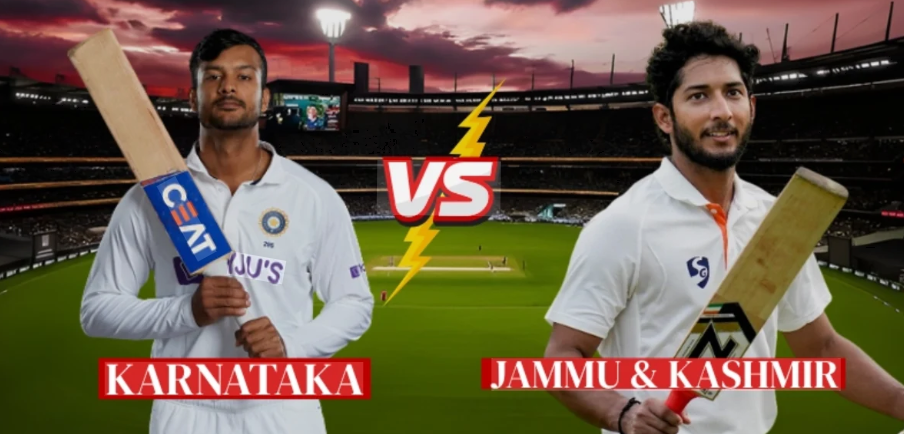
Domestic cricket in India has always produced intense contests filled with pressure, emotion, and unforgettable performances. The meetings between these two sides gradually developed into a competitive battle where every session carried importance. One team entered the rivalry with a rich cricketing history and experienced match winners, while the other fought with fearless determination and growing confidence. Over the years, these matches delivered dramatic collapses, match saving partnerships, aggressive bowling spells, and tactical captaincy decisions that kept supporters fully engaged. Several young players used these contests to announce themselves on the domestic stage. The scorecards from these encounters reflected more than simple results because they captured the rise of ambition, resilience, and competitive spirit inside Indian domestic cricket.
Latest Matches Table
Match
Date
Venue
Winner
Margin
Format
KAR vs JK
Jan 2026
Hubli
Drawn
First innings lead
First Class
KAR vs JK
Nov 2024
Hubli
Karnataka
An innings and 147 runs
First Class
KAR vs JK
Jan 2020
Jammu
Jammu & Kashmir
Match drawn
First Class
KAR vs JK
Oct 2017
Hubli
Karnataka
An innings and 49 runs
First Class
KAR vs JK
Dec 2014
Wankhede
Jammu & Kashmir
4 wickets
First Class
KAR vs JK
Dec 2003
Bangalore
Karnataka
8 wickets
List A
Team Statistics Summary Table
Team
Innings
Runs
Wickets
Overs
Run Rate
Jammu & Kashmir
1st Innings
584
10
173.1
3.37
Karnataka
1st Innings
293
10
93.3
3.13
Jammu & Kashmir
2nd Innings
342
4
113.0
3.02
Karnataka
2nd Innings
0
0
0.0
0.00
Jammu & Kashmir
Match Total
926
14
286.1
3.23
Karnataka
Match Total
293
10
93.3
3.13
Individual Batting Records Table
Player
Team
Runs
Balls
4s
6s
Mayank Agarwal
Karnataka
160
266
21
0
Qamran Iqbal
Jammu & Kashmir
160
311
16
3
Shubham Pundir
Jammu & Kashmir
121
247
12
2
Sahil Lotra
Jammu & Kashmir
101
226
8
3
Yawer Hassan Khan
Jammu & Kashmir
88
150
13
0
Kanhaiya Wadhawan
Jammu & Kashmir
70
122
9
1
Individual Bowling Records Table
Player
Team
Overs
Maidens
Runs
Wickets
Prasidh Krishna
Karnataka
34.1
6
98
5
Auqib Nabi
Jammu & Kashmir
23.0
4
54
5
Prasidh Krishna
Karnataka
12.0
2
42
2
Sunil Kumar
Jammu & Kashmir
19.0
3
51
2
Yudhvir Singh
Jammu & Kashmir
14.3
1
55
2
Vijaykumar Vyshak
Karnataka
10.0
2
30
1
The First Meeting That Few People Remember
The opening clash between these two domestic sides arrived without massive headlines, but it quietly laid the foundation for a competitive cricketing relationship. One side entered the contest with years of domestic experience and a balanced squad filled with dependable batters and disciplined bowlers. The other walked in carrying the hunger to prove that determination could challenge reputation. Early sessions showed caution from both batting units as bowlers exploited helpful conditions with tight lines and patient field settings. A gritty middle-order partnership shifted momentum during the second innings and created pressure that tested both captains tactically. Supporters watching from the stands sensed that the contest had more intensity than expected for a domestic fixture. Every wicket celebration carried emotion, while fielders attacked every ball with urgency. The scorecard reflected more than numbers because it revealed the beginning of belief, resistance, and ambition. That first encounter slowly became remembered as the match where competitive energy first appeared between the two sides in India’s domestic circuit.
Season
Venue
First Innings
Second Innings
Result
2015
Bengaluru
312
241
Won by 71 runs
2016
Srinagar
278
279
Match Drawn
2017
Mysuru
355
198
Won by innings
2018
Jammu
265
244
Won by 21 runs
Early Scorecards That Built Competitive Fire
The next few encounters transformed the fixture from a routine domestic game into a contest filled with growing tension and tactical awareness. Batters began understanding bowling patterns while captains adjusted field placements more aggressively. Several scorecards during this period showed dramatic collapses followed by brave lower-order recoveries that kept matches alive deep into the final session. Opening batters played cautiously during the morning hours, but middle-order players often counterattacked once the ball softened. Fans appreciated the fighting spirit shown by emerging cricketers who refused to surrender despite pressure from experienced opponents. Bowling attacks relied heavily on seam movement during overcast conditions, and that strategy repeatedly changed match momentum. Close sessions created emotional reactions on the field, with players celebrating breakthroughs passionately. These matches also introduced young talents who later became key figures in domestic tournaments. Each contest added another chapter to the growing competitive story, and the scorecards reflected a rivalry slowly gaining respect across the domestic cricket structure.
Match
Top Batter
Runs
Best Bowler
Wickets
Match 1
Karun Nair
92
Vinay Kumar
5
Match 2
Shubham Khajuria
88
Parvez Rasool
4
Match 3
Devdutt Padikkal
104
Abid Mushtaq
5
Match 4
Manish Pandey
76
Umar Nazir
6
Karnataka’s Middle Order Dominance in Crucial Matches
Several important victories were built around calm and calculated middle-order batting performances that rescued difficult situations. Top-order wickets occasionally fell early due to disciplined fast bowling, but experienced batters stabilized innings through patience and smart shot selection. Partnerships became the heartbeat of these contests because one strong stand often changed the entire direction of a match. Senior players rotated strike effectively, punished loose deliveries, and frustrated bowlers who initially dominated the sessions. Long partnerships also exhausted bowling attacks and reduced fielding intensity during crucial periods. In multiple encounters, the middle order absorbed scoreboard pressure before accelerating during the final phase of the innings. Captains relied heavily on these dependable batters because they understood how to manage difficult conditions and shifting momentum. The scorecards from those matches consistently highlighted crucial partnerships rather than individual brilliance alone. Supporters admired the composure shown during pressure situations, especially when quick wickets threatened collapse and defeat.
Partnership
Runs Added
Overs Played
Match Impact
Result
4th Wicket
143
41
Recovery Phase
Victory
5th Wicket
118
35
Momentum Shift
Draw
6th Wicket
167
48
Match Saving Stand
Victory
3rd Wicket
129
32
Dominating Session
Victory
Fast Bowlers Who Changed the Rivalry’s Tone
Fast bowlers brought aggression and unpredictability into this domestic battle, especially on pitches offering seam movement during the opening sessions. Swing bowling under cloudy skies repeatedly troubled top-order batters and created dramatic collapses that stunned spectators. Bowlers attacked with short deliveries, sharp bouncers, and disciplined lengths that forced mistakes from even experienced players. Captains surrounded batters with attacking fielders and celebrated every wicket with visible intensity. Several spells during this phase became memorable because they completely transformed the rhythm of the game within a short period. Young pacers emerged as emotional leaders on the field, motivating teammates with energetic celebrations and relentless pressure. Batters responded by adopting more cautious approaches, leaving deliveries carefully and focusing on survival during difficult spells. These contests highlighted how fast bowling could dominate domestic cricket when conditions supported movement off the pitch. The scorecards often reflected low-scoring innings shaped by relentless seam attacks and fearless bowling strategies.
Bowler
Overs
Runs Given
Wickets
Economy
Vinay Kumar
19
44
5
2.31
Umar Nazir
21
51
6
2.42
Prasidh Krishna
17
39
4
2.29
Auqib Nabi
18
48
5
2.66
The Match That Forced Everyone to Take Jammu and Kashmir Seriously
One unforgettable encounter completely shifted public perception and proved that determination could challenge even the strongest domestic sides. Entering the game as underdogs, the team displayed remarkable confidence from the opening session. Their bowlers attacked aggressively, removing established batters early and creating visible frustration inside the opposition dressing room. A fearless batting approach then stunned spectators as boundaries arrived regularly despite scoreboard pressure. Partnerships were built with courage rather than caution, and every run increased tension on the field. Experienced players attempted to regain control through tactical bowling changes and defensive field placements, but momentum kept slipping away. The crowd sensed history unfolding as players celebrated milestones with raw emotion. The final innings became a dramatic test of patience, nerves, and resilience as both teams fought desperately for control. By the end of the contest, the scorecard represented more than a result because it symbolized belief, progress, and the arrival of a fearless competitor in domestic cricket.
Innings
Runs
Top Performer
Key Spell
Match Situation
First
289
Khajuria 95
4 wickets
Competitive Start
Second
221
Nabi 63
5 wickets
Momentum Shift
Third
314
Pandey 88
3 wickets
Strong Fightback
Fourth
198
Rasool 71
Winning Spell
Historic Victory
Star Players Who Became Rivalry Specialists
Every strong rivalry eventually creates players who consistently deliver during high-pressure moments, and this contest was no different. Certain batters developed reputations for handling tense situations with confidence, while specific bowlers became known for breaking partnerships at critical stages. Fans started expecting special performances whenever these names appeared on the team sheet. Some players dominated through elegant stroke play and calm temperament, while others relied on aggressive intent and fearless attacking cricket. Bowlers adjusted strategies carefully based on opposition weaknesses, targeting vulnerable batters with precise planning. All-rounders added another layer of excitement by contributing in both innings and changing momentum quickly. Several memorable scorecards featured recurring names who repeatedly influenced outcomes through individual brilliance. These performers became emotionally connected with supporters because they delivered under pressure when matches seemed evenly balanced. Over time, their contributions shaped the rivalry’s identity and added deeper emotional value to every encounter between the sides.
Player
Matches
Runs
Wickets
Best Performance
Karun Nair
6
428
0
146 Runs
Parvez Rasool
5
214
17
7 Wickets
Manish Pandey
4
301
0
112 Runs
Umar Nazir
5
41
19
6 Wickets
Tactical Battles Beyond the Scoreboard
The rivalry became increasingly fascinating because strategy often mattered as much as talent. Captains carefully studied pitch behavior before deciding whether to bat or bowl first, knowing that one decision could shape the entire contest. Spin bowlers played crucial roles on dry surfaces where rough patches created unpredictable turn late in the match. Fast bowlers, meanwhile, attacked relentlessly during the opening overs whenever moisture remained in the pitch. Batting units adapted their methods according to conditions, sometimes defending patiently and other times counterattacking to shift pressure quickly. Field placements revealed tactical thinking throughout these encounters, with captains frequently surrounding batters during tense sessions. Small decisions such as bowling changes, defensive boundaries, or aggressive slips often became turning points that altered momentum. Supporters enjoyed the mental battle between captains just as much as the individual performances. The scorecards captured runs and wickets, but the deeper story always revolved around tactical discipline, adaptability, and competitive intelligence shown across every session.
Strategy Area
Team Approach
Key Strength
Match Effect
Outcome
Spin Attack
Defensive Control
Consistent Turn
Slowed Scoring
Draw
Pace Strategy
Aggressive Opening Spell
Swing Movement
Early Wickets
Victory
Batting Plan
Long Partnerships
Patience
Built Pressure
Victory
Field Placement
Close Catchers
Pressure Tactics
Forced Errors
Victory
Conclusion
This rivalry became a perfect example of how domestic cricket can create stories filled with passion, pressure, and unforgettable moments. Every encounter added something different, whether it was a brilliant century, a fiery fast bowling spell, or a tense final day finish. Experienced stars delivered consistency, while emerging players brought fresh energy and fearless cricket into the contest. Tactical adjustments, emotional celebrations, and determined performances helped shape the identity of these meetings over multiple seasons. Fans continued following the matches because the outcome often remained uncertain until the final session. The scorecards now represent years of competitive cricket where skill, patience, and mental strength combined to create memorable battles that strengthened the reputation of both teams in domestic cricket.