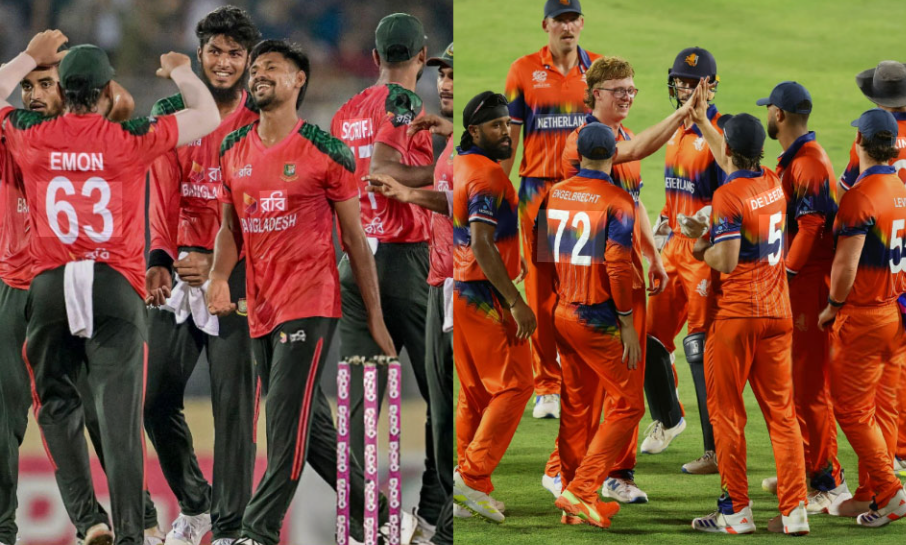
Cricket has often been shaped by matchups that go beyond numbers, and this encounter brings together two teams with very different journeys in international cricket. One side carries the experience of top tier competition, structured systems, and consistent exposure to high pressure tournaments. The other represents a growing cricketing nation building its identity through discipline, adaptability, and determination. When these teams meet, the match is not just about runs or wickets, but about measuring progress, resilience, and tactical awareness. Every innings, partnership, and bowling spell adds to a larger story that reflects the evolving nature of modern cricket and competitive balance.
Latest Matches
Date
Match
Venue
Winner
Margin
Result
Status
03-Sep-2025
Bangladesh vs Netherlands
Sylhet
None
Rain
No Result
Abandoned
01-Sep-2025
Bangladesh vs Netherlands
Sylhet
Bangladesh
9 wickets
Complete
Official
30-Aug-2025
Bangladesh vs Netherlands
Sylhet
Bangladesh
8 wickets
Complete
Official
13-Jun-2024
Bangladesh vs Netherlands
Kingstown
Bangladesh
25 runs
Complete
Official
28-Oct-2023
Bangladesh vs Netherlands
Kolkata
Netherlands
87 runs
Complete
Official
24-Oct-2022
Bangladesh vs Netherlands
Hobart
Bangladesh
9 runs
Complete
Official
Team Statistics Summary
Team
Matches
Won
Lost
Tied
No Result
Win %
Bangladesh
6
4
1
0
1
66.66
Netherlands
6
1
4
0
1
16.66
Tie Match
0
0
0
0
0
0.00
Total Stats
12
5
5
0
2
50.00
Home Record
3
2
0
0
1
66.66
Away Record
3
2
1
0
0
66.66
Individual Batting Records
Player
Team
Innings
Runs
Highest
Average
Strike Rate
Litton Das
Bangladesh
3
143
73
143.00
148.95
Tanzid Hasan
Bangladesh
3
102
54
51.00
127.50
Shakib Al Hasan
Bangladesh
3
87
64
43.50
119.17
Scott Edwards
Netherlands
4
74
30
18.50
105.71
Max O’Dowd
Netherlands
4
62
31
15.50
95.38
Teja Nidamanuru
Netherlands
3
53
26
17.66
98.14
Individual Bowling Records
Player
Team
Overs
Wickets
Runs
Best
Economy
Taskin Ahmed
Bangladesh
11.3
8
74
4/28
6.43
Nasum Ahmed
Bangladesh
8.0
5
49
3/21
6.12
Mustafizur Rahman
Bangladesh
10.0
4
61
2/20
6.10
Paul van Meekeren
Netherlands
12.0
4
82
2/21
6.83
Kyle Klein
Netherlands
6.2
3
68
3/53
10.73
Tim Pringle
Netherlands
7.0
2
48
1/16
6.85
Early Encounters and Development of Competitive Balance
The earliest meetings between the two sides reflected a clear gap in experience, but also the beginning of a competitive storyline that would slowly evolve. One team entered the field with full member confidence, structured systems, and exposure to high pressure tournaments. The other arrived with associate level resilience, often relying on discipline, adaptability, and moments of individual brilliance. These initial encounters were less about rivalry intensity and more about learning curves, where one side tested strategies while the other tried to survive long spells under pressure. Despite the imbalance, the matches offered glimpses of fight, especially through middle order resistance and occasional bowling spells that challenged expectations. Over time, these early games laid the foundation for a competitive respect, even if results were one sided. Fans began noticing that even dominant scorelines contained phases of uncertainty, especially during middle overs when momentum briefly shifted.
Phase
Key Event
Impact
Outcome
Initial Overs
Fast start by stronger side
Early control established
Pressure on opposition
Middle Overs
Defensive batting effort
Slowed momentum
Partial recovery
Bowling Phase
Spin introduction
Breakthrough wickets
Collapse triggered
Death Overs
Lower order resistance
Added runs
Reduced defeat margin
Rise of Structured Batting Approach Under Pressure
As encounters continued, the developing side began adopting a more structured batting approach designed to reduce collapses and build innings in phases. The focus shifted from survival to controlled scoring, especially by rotating strike and minimizing dot balls. The stronger opposition, however, continued to rely on disciplined bowling units that applied pressure through consistent line and length. This phase of competition saw more stable partnerships, although breakthroughs often came at crucial moments, breaking momentum. The evolving batting strategy showed improvement in handling early pressure, but sustaining long innings remained a challenge. On the other hand, experienced bowlers exploited conditions efficiently, often targeting weaknesses in footwork and shot selection. These matches became less about complete dominance and more about controlling key phases. Even small partnerships were celebrated as progress, reflecting a gradual narrowing of the competitive gap.
Phase
Key Event
Impact
Outcome
Powerplay
Controlled start
Reduced early wickets
Stable foundation
Middle Overs
Partnership building
Momentum shift attempt
Temporary control
Pressure Phase
Wicket bursts
Interrupted progress
Score stagnation
Final Overs
Acceleration attempt
Added runs
Moderate finish
Tactical Evolution and Spin Dominance Strategy
A defining feature of these clashes became the tactical use of spin and slow bowling variations. The stronger side often relied on spin-heavy attacks, especially in conditions that supported turn and grip. This created significant challenges for batters who were still adapting to high-level spin pressure. Field placements became increasingly aggressive, cutting off singles and forcing risky strokes. The opposing side attempted to counter this by using sweep shots and crease movement, but consistency remained difficult. Tactical adjustments were visible over time, with more emphasis on building partnerships before taking risks. Bowlers responded with tighter defensive fields and variations in flight and pace. This tactical battle became a key factor in determining match outcomes, often dictating scoring rates and wicket patterns. Matches frequently shifted direction during middle overs when spin pressure peaked.
Phase
Key Event
Impact
Outcome
Spin Entry
Introduction of spinners
Reduced scoring rate
Pressure buildup
Mid Overs
Defensive batting
Survival mode
Slowed innings
Wicket Phase
Flight variations
Mistimed shots
Quick dismissals
Control Phase
Field restrictions
Limited singles
Score stagnation
Key Partnerships and Momentum Shifts in Matches
Across several encounters, partnerships played a crucial role in determining whether a competitive total could be achieved or a chase could remain alive. The stronger side often relied on top order stability followed by aggressive middle order acceleration. Meanwhile, the developing team focused on building smaller but meaningful partnerships to stay in the game. However, momentum shifts were frequent, often triggered by a single breakthrough wicket. Once a set batter was dismissed, collapses became common due to pressure and lack of depth in recovery options. In contrast, the more experienced side showed greater consistency in rebuilding after setbacks. These contrasting patterns defined the rhythm of matches, where stability versus fragility became a recurring theme. Even short partnerships were valuable in shifting match perception temporarily, especially during tense middle overs.
Phase
Key Event
Impact
Outcome
Opening Stand
Steady partnership
Stable start
Confidence build
Middle Overs
Breakthrough wicket
Momentum shift
Pressure increase
Recovery Phase
Short partnership
Temporary balance
Delayed collapse
Final Phase
Lower order effort
Extra runs
Respectable total
Bowling Pressure and Match Control Phases
Bowling remained the most decisive factor across most encounters, with experienced bowlers consistently dictating match flow. Early breakthroughs often set the tone, forcing batting sides into defensive approaches. The use of disciplined seam bowling combined with spin variations created sustained pressure that limited scoring opportunities. In several matches, dot ball pressure built naturally, leading to forced errors. The developing team occasionally showed resilience through counter attacking shots, but inconsistency remained a challenge. Fielding support and catching efficiency also played a major role in converting pressure into wickets. As matches progressed, bowlers increasingly targeted specific weaknesses, showing improved planning and execution. This phase highlighted the importance of control overs, where matches were often won or lost.
Phase
Key Event
Impact
Outcome
Early Overs
New ball attack
Early wickets
Top order collapse
Middle Overs
Spin control
Scoring restriction
Pressure buildup
Breakthrough Phase
Catch opportunities
Wickets gained
Momentum shift
Closing Overs
Tight bowling
Low run rate
Controlled finish
Fan Reactions and Emotional Match Atmosphere
The emotional landscape surrounding these matches added another layer of intensity. Supporters of the stronger side often expected dominance, while underdog fans celebrated every competitive phase as a sign of progress. Social media amplified reactions, especially during close spells or unexpected partnerships. Even small breakthroughs were celebrated passionately by one side and questioned by the other. Stadium atmosphere during ICC tournaments created added pressure, influencing player decision making. Momentum shifts triggered visible emotional swings among fans, reflecting how closely the matches were followed. Over time, respect between fan groups increased, especially as contests became slightly more balanced. The emotional narrative became almost as important as the score itself, shaping how each match was remembered.
Phase
Key Event
Impact
Outcome
Early Game
Crowd expectations
High pressure
Nervous start
Turning Point
Wicket moments
Emotional shift
Loud reactions
Middle Phase
Partnership build
Hope increase
Balanced tension
Final Overs
Result clarity
Emotional closure
Celebration or disappointment
Modern Clashes and Competitive Narrowing
In recent encounters, the competitive gap has shown signs of narrowing, with improved preparation and exposure helping the developing side become more consistent. Batting depth has improved slightly, allowing longer resistance in pressure situations. Meanwhile, the stronger side continues to rely on structured gameplay and disciplined execution rather than sheer dominance. Matches have become more strategic, with conditions, toss decisions, and matchups playing a larger role. The overall quality of cricket has improved, making contests more engaging for neutral fans. Even when results remain predictable, phases within matches often feel competitive. This evolution suggests a gradual shift in balance, where experience still leads but unpredictability is increasing.
Phase
Key Event
Impact
Outcome
Powerplay
Tactical starts
Balanced beginning
Competitive opening
Middle Overs
Improved batting
Longer resistance
Stabilized innings
Pressure Phase
Key wickets
Momentum swings
Uncertain outcome
Final Phase
Execution strength
Match control
Narrower margins
Strategic Lessons and Long Term Cricket Impact
Over time, these encounters have contributed significantly to broader lessons in international cricket development. The stronger side learned the importance of not underestimating associate opposition, especially in tournament environments where pressure can shift momentum quickly. The developing side gained valuable exposure to high quality bowling attacks and structured game planning. These matches also highlighted the importance of adaptability, especially in changing pitch conditions and pressure situations. Cricket analysts often point to these games as examples of evolving global competitiveness, where gaps are slowly reducing through experience and exposure. The long term impact is visible in improved performances, better tactical awareness, and stronger mental resilience from both sides.
Phase
Key Event
Impact
Outcome
Learning Phase
Early exposure
Experience gain
Skill development
Adaptation Phase
Tactical changes
Improved gameplay
Better execution
Competition Phase
Balanced contests
Reduced gap
Stronger rivalry feel
Evolution Phase
Modern approach
Strategic maturity
Global improvement
Conclusion
The clash between these two sides highlights how international cricket continues to evolve with time. While experience and structure often provide an advantage, determination and adaptability ensure that the contest never becomes one sided for long. Each meeting adds valuable lessons for both teams, improving skills, strategy, and mental strength. The scorecard alone does not fully capture the intensity, but the phases of play reveal shifting momentum and competitive spirit. In the end, these encounters contribute to the global growth of the game, showing that every match plays a role in shaping future performances and rivalries across world cricket.